
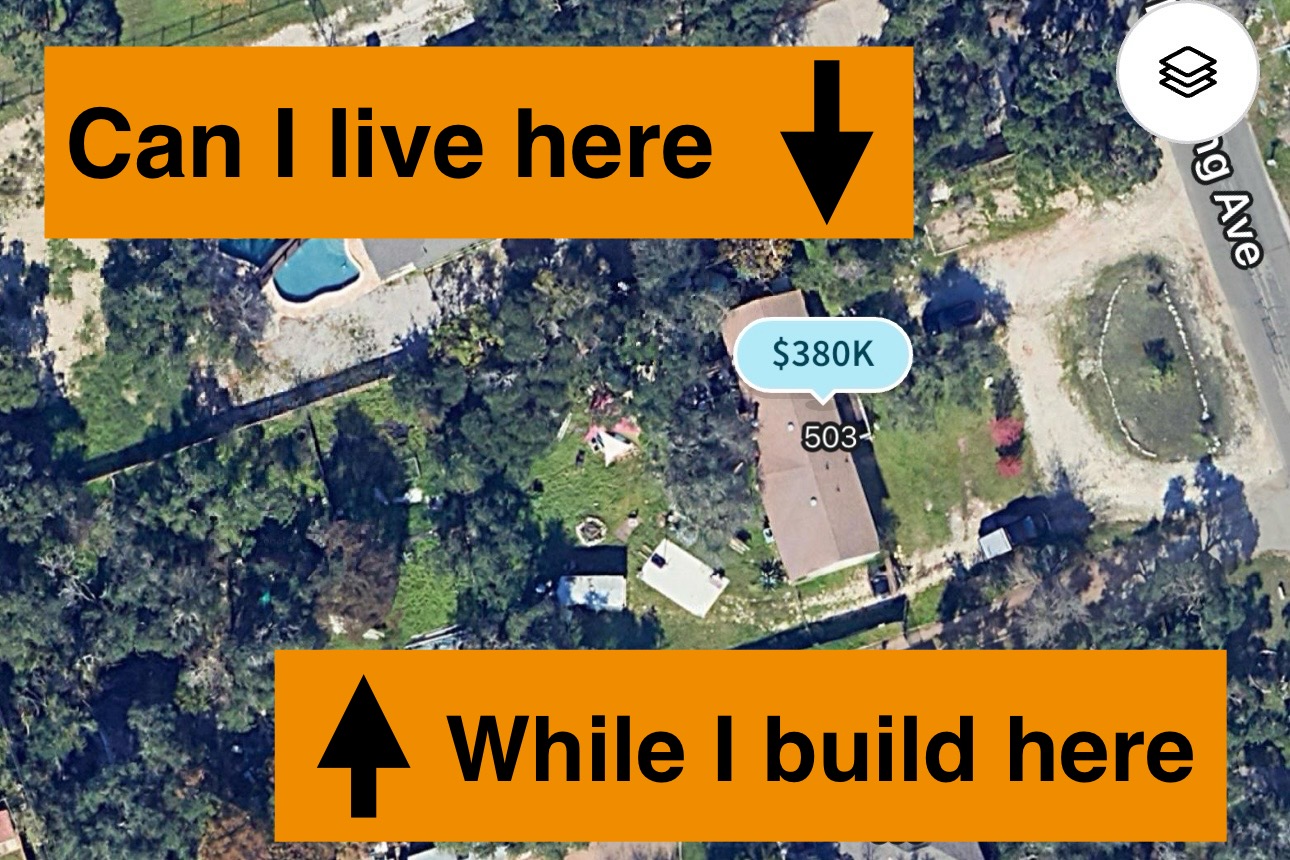
If you want to build a new home on the same land you currently live on, how would you rather do it?
- Continue living in your current home while you build the new house?
- Pay for a rental (while still paying your old mortgage), move all your things to that rental, and then move all your things back to your new house when construction is complete?
For those considering building a new house on their current lot, being able to stay in their existing house during the construction of the new house can provide substantial cost and convenience savings.
Let’s discuss why Cedar Park should create a new temporary use permit to allow temporary residence during construction, or “stay and build permit” as I’ll refer to it.
Why is Redevelopment Important?
Although we hear it said periodically, a city is never “built out.” Like a living organism, cities continually evolve over time. Eventually, buildings that were once new wear down and need to be replaced.
Barriers to redevelopment do not protect property values or neighborhood character, but instead lock neighborhoods in a state of managed decay and declining value. Fading paint, worn out roofs, water damage, and many other issues work against homeowners.
This is why redeveloping old houses and structures and the lots they sit on are strategic goals of Cedar Park.
Redevelopment:
- fosters aesthetic improvements,
- creates and supports local jobs and industries,
- increases housing options and supply (with proper zoning allowances!)
- and brings more tax revenue to support city services and projects.

In the above image, you can see how redevelopment changed West Live Oak Street in Austin. The house on the left stayed the same, the house in the middle underwent moderate renovations, and the house on the right was torn down and replaced.
The owner on the left benefits from having a great deal of new equity. The owner in the middle has a charming updated historical house, and the owner on the right made a substantial investment in the future direction of the neighborhood. But these projects benefit more people than just the homeowners.
The City benefits by bringing in much more revenue without increasing infrastructure costs (no new roads or utilities need to be built). This money can be used to either lower average property taxes per resident or to pay for new improvements. The City also receives sales taxes paid for the materials used in these construction projects.
The community benefits by having a nicer looking street. Additionally, the construction creates job and sales opportunities for residents and local businesses.
Not every lot in Cedar Park is large enough to support two houses at once. But as you can see from the Zillow image below, there are a variety of neighborhoods around Cedar Park, especially older neighborhoods, that have sufficient space for a homeowner to build a new house while staying in their old house.

How Does a Stay and Build Permit Benefit Homeowners?
Reduced Cost
A stay and build permit provides many benefits to homeowners who wish to build a new house. The first benefit is cost reduction.
Currently, a homeowner must move out of their existing house before they can build a new house on their lot, regardless of the characteristics of the lot. This adds costs to the development project, both in terms of money and time. These costs are roughly:
- $20,000 moving costs and lost productive time to move to a rental
- $45,000 for a year and a half of renting at $2,500 per month
- $5,000 buying or renting new or temporary furnishings
- $20,000 moving costs and lost productive time to move back to the lot
These plus additional unforeseen costs and the difficulty of moving, twice, would dissuade many people from even considering building a new home on their lot. By allowing a homeowner to stay on site during the build, these costs can be avoided.
Comfort Zone
A second benefit of a stay and build permit is that homeowners can stay in the comfort zone of their same lot, school, neighborhood, and network of friends.
Many of us chose to move to a particular neighborhood for reasons that appealed to us: proximity to family, similar age of neighbors, short commute to work, neighborhood amenities, mature trees, walkability and more. For people who want to build a house, having to move to a different location can be a difficult choice. People spend years or decades getting to know and build friendships with their neighbors, and moving away is a heart-wrenching decision.
As I discussed above, both the City and neighborhoods benefit from redevelopment as well as the homeowners. If we allow homeowners to stay in their comfort zone during construction, more will choose to build a new house, and we all benefit.
Peace of Mind
Unfortunately, homes under construction face risks from vandalism, theft, arson, and other hazards. Being able to live on-site will allow homeowners to watch over their property, giving them substantial peace of mind during the build process.
Additionally, homeowners being around to observe and correct issues during the construction phase saves time and money. Once a mistake has been framed in, paved, installed, or drywalled over, it’s too late to make a change without incurring substantial additional cost.
Civic Pride and Building Culture
When my parents built their first house in rural Texas, I spent the summer working with the builder. From hand-digging trenches for the footings and tying rebar to climbing up in the rafters with a nail gun, I got to experience the pride of building. Ever since then, I’ve enjoyed doing home improvement projects to leave the homes I’ve lived in better than I found them.
Encouraging and enabling residents to have a hand in the physical development of the City builds pride in the community, a sense of belonging, and leads to our neighborhoods looking better and better. The difference in the West Live Oak Street photo above between 2014 and 2025 is a perfect example of this building culture and civic pride in action – a cleaner street, nicer yards, trimmed trees, higher quality buildings, and better walkability.
What Would This Temporary Permit Look Like?

The language for a permit to temporarily live in an old residence during the construction of a new residence could be fairly straightforward and fit within the City’s 11.02.093 Temporary Uses code.
Additional language could be added, similar to 12.15 Assurances for Completion of Improvements or 14.07.020 Fiscal Surety, that requires a homeowner who is granted this permit post a surety bond requiring the old house be demolished before receiving a certificate of occupancy for the new house.
How long should be given to move out and demolish the old house? In my opinion, 90 days should be sufficient. There is plenty of time during the building process to arrange for demolition. The City’s abatement code can be used to address homeowners who fail to comply in a timely manner with the permit requirements.
A Small Step
This stay and build permit would be a tool that helps ensure our neighborhoods are slowly rejuvenated over time. It would be used by a small number of Cedar Park’s residents, primarily those on larger lots. One by one, new construction homes replacing dilapidated structures will have a positive impact, both to individual homeowners and the city as a whole.
How can you help Cedar Park get a stay and build permit?
- Follow the Cedar Park Strong Facebook page to stay in the loop about land use reform efforts.
- Share this article with your neighbors.
- Stop by one of our monthly meetups
- Talk with your council members and let them know why you support this reform.